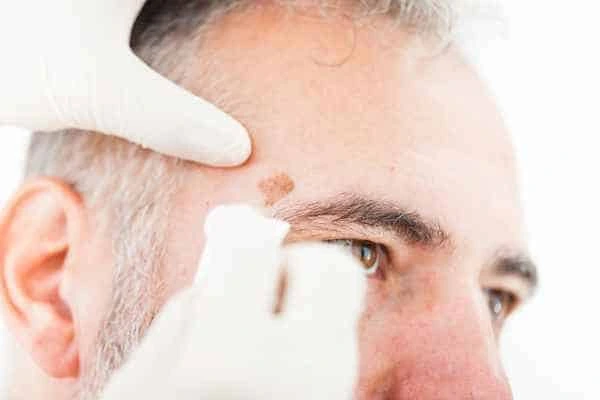
Age spots are a common skin concern, particularly as we get older. These flat, darker patches often appear on sun-exposed areas over many years, including the face, hands, arms, and shoulders.
Although age spots are usually harmless, some people choose to have them treated for cosmetic reasons.
At LA LIPO, we offer CryoPen cryotherapy for selected benign skin blemishes, with home-based appointments available in certain areas of the UK.
Before having an age spot removed, we recommend having your GP or a dermatologist check it. What looks like a harmless patch of pigmentation could sometimes be something else, so it’s best to know exactly what you’re dealing with before arranging treatment.
Age spots, also known as solar lentigines or sun spots, are flat areas of increased pigmentation that develop over time.
They are usually light brown, dark brown or tan in colour, although their appearance can vary depending on your natural skin tone.
Age spots are commonly found on:
Face and forehead
Back of the hands
Arms and shoulders
Upper back
Other areas regularly exposed to sunlight.
They become more common with age, particularly in people over 50, but younger adults can develop them too.
Age spots themselves are benign and don’t normally require treatment. However, you should never assume a new or changing pigmented patch is an age spot.
What Causes Age Spots?
The main cause of age spots is long-term exposure to ultraviolet (UV) radiation from sunlight or sunbeds.
UV exposure can increase melanin production in the skin. Over time, this pigment may become concentrated in certain areas, creating the darker patches associated with solar lentigines.
Age, skin type and previous sun exposure can all influence their development.
Although age spots are generally harmless, protecting your skin from further UV exposure can help reduce additional sun damage.
How Does CryoPen Treatment Work?
CryoPen is a handheld cryotherapy device that delivers controlled freezing to selected skin tissue.
When used on an appropriately assessed benign age spot, the freezing process affects the pigmented tissue. The treated area may darken, blister or form a crust before gradually healing.
Pigmentation may improve as the skin recovers.
Not every age spot is suitable for cryotherapy, and the response varies depending on the lesion’s size, location, and characteristics.
Some people may notice reduced pigmentation, while others may need further treatment or see little improvement.
What Happens During an Appointment?
Before treatment, the practitioner will review the area and discuss whether CryoPen may be appropriate.
If the lesion has not been adequately assessed or there is any uncertainty about its appearance, you may need to see your GP or a dermatologist before cosmetic treatment can be considered.
Where treatment is appropriate, the practitioner will explain the procedure, possible side effects and aftercare.
The freezing itself is usually brief, although the overall appointment may take longer depending on the assessment and number of suitable areas being treated.
What Areas Can Be Treated?
Cryotherapy may be considered for selected, confirmed benign age spots on areas such as the hands, arms or other suitable parts of the body.
Treating the face or areas near sensitive areas, particularly around the eyes, requires extra care and may not be appropriate.
The location and characteristics of each lesion will help determine whether treatment should proceed.
Benefits and Limitations of CryoPen Age Spot Removal
CryoPen offers a non-surgical approach to treating certain benign pigmented lesions.
Potential advantages include:
A targeted freezing procedure
No surgical incision for suitable lesions
Relatively short treatment appointments
The possibility of treating selected areas without visiting a clinic
Individual assessment before treatment
However, cryotherapy is not suitable for every type of pigmentation.
It can also cause lighter or darker patches of skin, sometimes permanently. This is particularly important for people with darker skin tones or those prone to pigmentation changes.
Treatment cannot guarantee complete clearance, and further age spots may develop with continued sun exposure.
Is CryoPen Age Spot Removal Safe?
Cryotherapy is an established method for treating certain skin lesions, but it isn’t without risks.
Possible side effects include:
Redness and swelling
Stinging or tenderness
Blistering and crusting
Temporary changes in skin colour
Permanent lightening or darkening of the skin
Infection or delayed healing
Scarring
Before going ahead, your practitioner should explain the risks relevant to your skin and the proposed treatment area.
Important: Do not use CryoPen to freeze an undiagnosed pigmented lesion. Any new, changing, irregular, bleeding or otherwise suspicious patch needs appropriate medical assessment first.
Age Spot Removal FAQs
Find answers to some of the most common questions about cryopen age spot removal, including how it works, what to expect, results and suitability.
Yes, they’re just different names for the same thing. You might also hear them called solar lentigines. These flat, darker patches develop over time, usually on areas of skin that have had plenty of sun exposure.
They are generally harmless, although other skin conditions can look similar.
LA LIPO offers mobile appointments for selected cosmetic skin treatments in certain parts of the UK.
Whether a procedure can be carried out at home depends on the lesion, your individual circumstances, practitioner availability and the suitability of the treatment environment.
A home appointment should proceed only when the lesion has been appropriately assessed, and the treatment is suitable.
If you’ve been told that a pigmented patch is a benign age spot and you’re interested in cosmetic treatment, our team can explain the CryoPen service and appointment process.
We’ll help you understand what’s involved, including treatment limitations, possible side effects and whether a home appointment may be available in your area.
If the lesion hasn’t been diagnosed or you’re unsure about its appearance, please seek medical assessment before booking cosmetic removal.