Cryotherapy Blemish Removal with LA LIPO

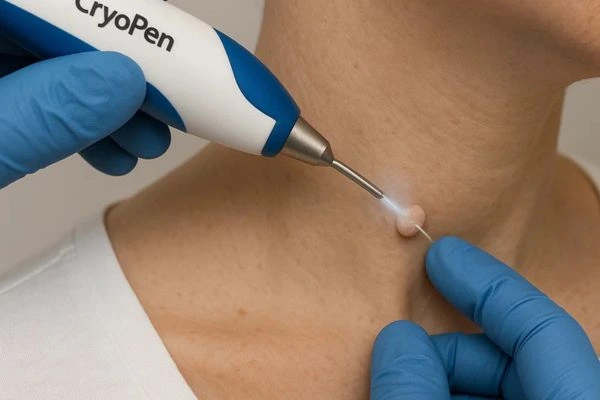
CryoPen Treatment for Selected Benign Skin Blemishes

Have you noticed a skin tag that keeps catching on clothing, a troublesome verruca, or a small blemish you’d prefer removed?
Cryotherapy may be an option worth considering.
At LA LIPO, we offer CryoPen blemish removal for selected skin concerns, with appointments available across the UK, including home visits where suitable.
Before treatment, it’s important to identify the blemish and whether freezing is an appropriate treatment. Some skin changes need a medical assessment before you can consider cosmetic removal.
Our team can explain how cryotherapy works, what to expect afterwards, and whether your concern is suitable.
cryotherapy Northampton

What Is Cryotherapy?

Cryotherapy uses very low temperatures to freeze targeted skin tissue.
In dermatology, freezing techniques treat a range of skin conditions. Cosmetic cryotherapy may also be considered for certain benign skin lesions, depending on their type, location and previous assessment.
At LA LIPO, we use CryoPen technology for selected blemish removal procedures.
The device delivers controlled freezing to a small area of skin. This affects the treated tissue, which may subsequently blister, form a crust and gradually heal.
Although the treatment is localised, it can also affect the surrounding skin. Changes in pigmentation, scarring and other complications are possible.
Not every skin blemish is suitable for cryotherapy, and treatment does not guarantee complete removal.

What Skin Blemishes Can Be Considered for Cryotherapy?

Cryotherapy may be considered for selected skin lesions once their identity and suitability have been established.

Skin Tags

Skin tags are small, usually harmless growths that often develop around the neck, underarms, and other areas where skin rubs together.
Some people choose to have them removed because they catch on clothing or jewellery.

Common Warts

Certain types of human papillomavirus (HPV) cause common warts. Cryotherapy is one treatment option, but warts may require multiple sessions and can return after treatment.
Not every wart needs to be removed. Some disappear naturally over time.

Verrucas

Verrucas are warts that develop on the feet. They may be uncomfortable, particularly when pressure is applied while walking.
Treatment options include pharmacy preparations and cryotherapy. Some verrucas are persistent and may not respond fully to freezing.

Seborrhoeic Keratoses

Seborrhoeic keratoses are common benign skin growths that may appear waxy, raised or slightly rough.
They can resemble other skin conditions, including some skin cancers, so accurate identification is particularly important.
Cryotherapy may be considered for an appropriately diagnosed benign lesion, depending on its characteristics.

Age Spots

Solar lentigines are flat, pigmented areas commonly associated with sun exposure.
However, not every brown mark is an age spot. Some pigmented lesions require medical investigation.
Consider cosmetic treatment only after a professional assessment.

Other Benign Blemishes

Depending on the diagnosis, equipment and treatment protocol, other skin concerns may be considered for cosmetic removal.
These can include certain cherry angiomas, milia or previously diagnosed benign lesions.
However, cryotherapy is not necessarily the most appropriate method for every type of blemish.
Your practitioner should explain the available options and whether medical assessment is needed before proceeding.

Can Cryotherapy Be Used to Remove Moles?

Some people enquire about cryotherapy because a mole catches on clothing or they would prefer to have it removed.
Moles need particular care.
Do not freeze a pigmented lesion simply because it appears harmless. Cryotherapy destroys tissue, meaning it does not preserve a specimen for laboratory examination.
If a mole is new, changing, irregular, bleeding, itching, or otherwise unusual, an appropriate healthcare professional should assess it before any cosmetic procedure.
For a previously diagnosed benign mole, the best removal method depends on its characteristics and whether tissue examination is needed.
LA LIPO can discuss cosmetic treatment enquiries, but you should not treat an undiagnosed or suspicious mole with CryoPen.

How Does CryoPen Treatment Work?

1. Initial Enquiry and Suitability

We’ll ask about the blemish you’d like treated, where it is located and any relevant medical history.
You may be asked to provide information or photographs before arranging an appointment.
Photographs alone may not be enough to establish a diagnosis. If the lesion is uncertain or concerning, you will need an appropriate medical assessment.

2. Preparing the Area

Where treatment is suitable, the practitioner examines the area, discusses the procedure and explains the possible side effects.
The practitioner prepares the treatment area based on the equipment and procedure used.

3. Controlled Freezing

The CryoPen applicator delivers controlled freezing to the selected lesion.
You may experience stinging, cold or discomfort during the application.
The length and number of freezing applications depend on the lesion and treatment protocol.

4. Healing and Aftercare

Following treatment, the skin may become red, swollen or tender.
A blister or crust can form as the area heals. The treated tissue may gradually separate from the surrounding skin.
Your practitioner should explain how to care for the area, what changes to expect and when to seek further advice.
Some lesions require further treatment, while others may not respond as expected.

What Happens After Cryotherapy?

Healing varies depending on the lesion, treatment depth, location, and individual skin response.
During recovery, you may notice:
  • Redness or mild swelling
  • Tenderness or stinging
  • Blistering
  • A scab or crust forming.
  • Temporary changes in skin colour
Some areas heal within a couple of weeks, while others take longer.
Avoid picking at scabs or disturbing blisters. Follow the aftercare instructions provided for your particular treatment.
If you develop increasing pain, spreading redness, discharge, fever or other concerning symptoms, seek medical advice.

What Are the Risks of Cryotherapy?

Cryotherapy is a recognised method for treating certain skin lesions, but it carries risks.
Possible complications include:
  • Pain or prolonged tenderness
  • Blistering or bleeding
  • Infection
  • Lighter or darker skin pigmentation
  • Scarring or changes in skin texture
  • Temporary or persistent numbness
  • Incomplete removal or recurrence
Pigmentation changes can be particularly noticeable on darker skin tones and may sometimes be permanent.
The likelihood of complications depends on factors such as the treatment area, depth of freezing and individual skin characteristics.
Your practitioner should discuss the relevant risks before treatment.
When Should a Doctor Check a Skin Blemish?
Some skin changes should be medically assessed rather than booked directly for cosmetic removal.
Arrange an assessment if a mark:
  • Is new or changing in appearance
  • Has irregular borders or several colours
  • Is growing unexpectedly
  • Bleeds without an obvious cause
  • Forms a persistent sore or crust
  • Changes in size, shape or colour
  • Cannot be confidently identified
These features do not necessarily mean that a lesion is cancerous, but they should not be ignored.
If you are concerned about a mole or another changing skin lesion, contact your GP or an appropriate dermatology service.
Cosmetic cryotherapy should not delay necessary medical assessment.
Cryotherapy at Home with LA LIPO
LA LIPO offers mobile cosmetic treatments across selected UK locations.
For suitable CryoPen procedures, we may arrange treatment in the comfort and privacy of your home.
Before confirming an appointment, we’ll discuss your location, the blemish being considered and any practical requirements.
Home treatment does not remove the need for appropriate assessment, informed consent or aftercare.
If the lesion needs medical investigation, postpone cosmetic treatment until the necessary assessment has taken place.
How Much Does CryoPen Treatment Cost?
Cryotherapy prices depend on the type, size and number of lesions being considered.
The final cost may also depend on your treatment needs and whether you need further appointments.
LA LIPO will explain the relevant charges, including any consultation fees or deposits, before you decide whether to proceed.

Cryotherapy Frequently Asked Questions

CryoPen is a device that applies controlled freezing to selected areas of skin.

It may be considered for certain benign skin lesions following an appropriate assessment. Not every blemish can or should be treated with freezing.

Some people experience stinging, cold or a sharp sensation during treatment.
The area may remain tender afterwards, particularly if blistering or inflammation develops.
Discomfort varies depending on the lesion and treatment area.
Appointment length depends on the number, size, and location of the lesions being treated.
The freezing application itself may be brief, but you’ll need additional time for assessment, preparation, and aftercare advice.
LA LIPO can explain the expected appointment duration when discussing your treatment.
Cryotherapy may be considered for selected skin tags, although other removal methods may be more appropriate.
Before treatment, the practitioner should establish that the growth is a skin tag and assess whether freezing is suitable.
Cryotherapy is one option for treating certain common warts.
However, treatment does not always work after a single session, and warts can return.
Some warts disappear naturally, so immediate removal is not always necessary.
Cryotherapy may be considered for selected verrucas, although results vary.
Some verrucas are resistant to treatment, and additional sessions or alternative approaches may be needed.
Do not use CryoPen on suspicious or undiagnosed pigmented moles.
A previously diagnosed benign mole may still require a different removal method, particularly if tissue needs to be preserved for laboratory examination.
Assess appropriately before considering any cosmetic mole removal.
Certain appropriately diagnosed benign pigmented lesions may be considered for cryotherapy.
However, brown or dark skin marks should not be assumed to be age spots. Some require medical assessment before cosmetic treatment.
Some cherry angiomas may be treated with appropriate lesion-removal techniques.
The most suitable method depends on the lesion’s size, location and characteristics.
Cryotherapy is not necessarily the preferred option for every cherry angioma.
Scarring is possible, although not everyone develops a noticeable scar.
Some people experience lighter or darker pigmentation, changes in skin texture or a persistent mark after treatment.
Your practitioner should explain the risks relevant to your skin and the area being treated.
Healing commonly takes around one to three weeks, although this varies.
Larger or deeper lesions, particularly on the lower legs, may take longer.
Your practitioner should explain the expected recovery for your individual treatment.
You can generally wash the area gently, following the aftercare advice provided.
Avoid rubbing, picking or disturbing the treated skin while it heals.
The practitioner may recommend additional precautions depending on the lesion and treatment site.
Blistering can occur after cryotherapy.
Avoid deliberately bursting or picking at the blister unless an appropriate healthcare professional advises you to.
Keep the area clean and follow your aftercare instructions.
If the blister becomes very painful or shows signs of infection, seek medical advice.
There is no fixed number of sessions suitable for every lesion.
Some respond to one treatment, while others may require further assessment or additional freezing.
Complete removal cannot be guaranteed, and further treatment is not always appropriate.
Yes. Some lesions may recur or remain partially visible after treatment.
This can happen if the treated tissue has not been completely affected or if the underlying condition persists.
Your practitioner can discuss the appropriate next steps following assessment.
Not necessarily.
Skin pigmentation, previous scarring, medical history and the location of the lesion may affect suitability.
People with darker skin tones may have a greater risk of noticeable pigment changes after freezing.
An individual assessment is important before treatment.
Do not use cosmetic CryoPen services to treat suspected skin cancer.
Some medically supervised dermatology services use freezing techniques for specific diagnosed skin conditions, but this differs from routine cosmetic blemish removal.
An appropriately qualified healthcare professional should assess any suspicious lesion.
Certain medical conditions, including diabetes with impaired sensation or circulation problems, may affect healing and treatment suitability.
Tell your practitioner about any medical conditions, medications or previous healing difficulties.
We may need medical advice before we can consider treatment.
Contact LA LIPO to discuss the skin concern you’d like assessed.
We’ll explain the available appointment options, whether further medical assessment is required, and the relevant booking information.

Book a Cryotherapy Consultation with LA LIPO

Considering CryoPen treatment for a skin tag, wart, verruca or another blemish?
Our team can explain the treatment process, discuss suitability and help you understand the possible benefits, risks and limitations.
With appointments available in selected UK locations, including suitable home visits, we aim to make accessing cosmetic treatment more convenient.
 
All cosmetic procedures are subject to individual suitability. Treatment results vary, and we cannot guarantee complete removal.